
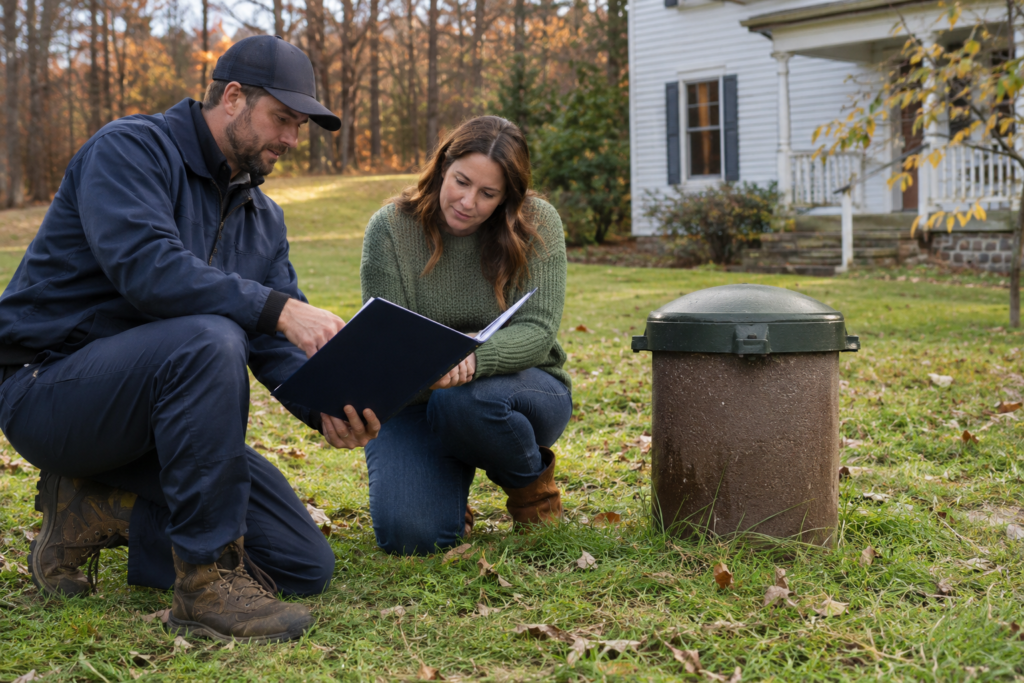
Well and septic records near Addison can reveal details you will never see during a living-room tour of a home served by private systems. It may help identify where systems were installed, what work was approved, and which questions should go to a qualified inspector or contractor.
Records are a starting point, not a current performance guarantee. Plan to combine the available history with appropriate present-day evaluation, and leave enough time in your purchase agreement to review both.
Finding well and septic records near Addison
Begin with the property address, parcel number, county, and municipality. Do not send requests based only on “near Addison.” The correct health department and available records depend on the property’s actual jurisdiction. Have the seller share any previous names or addresses associated with the property if a records search is difficult.
For property within Lenawee County, the health department’s document request page explains how to request well and septic information. Ask what identifying details are needed and what turnaround to expect. Start promptly; a contract deadline may arrive before an incomplete request is resolved.
Read the well record as a construction history
Michigan’s Water Well Viewer is another way to locate available records. Match the record to the parcel carefully because mapped locations can contain errors. If something does not line up, ask the local health department or a well professional to help identify the correct installation.
A record may include installation details useful to a well contractor. Ask that professional to explain what the information means for the current equipment and your intended use. A historical drilling record does not tell you that today’s water quality is satisfactory or that the pump presently performs as expected.
Questions to ask about the well
- Is the well shown in the record the one currently serving the house?
- What pump, pressure equipment, or treatment equipment has been replaced?
- Are there maintenance invoices and recent laboratory results?
- What testing is appropriate for this property and its location?
- Are there abandoned wells or older installations that need review?
Let the health department, qualified well professional, and appropriate laboratory guide testing and sampling. Do not use clear appearance, acceptable taste, or a seller’s informal test as a substitute for the evaluation your purchase requires.
Understand what the septic paperwork covers
Ask for the permit, installation documentation, available layout, repair records, and pumping history. Lenawee County’s sewage disposal program explains its permitting and inspection role. Have the department or a qualified professional interpret the documents for the specific system.
Compare the recorded layout with the home as it exists today. A later bedroom addition, converted space, or proposed expansion deserves a direct question about system suitability and approvals. Do not assume that a listing’s room count establishes what the sewage system was designed or approved to serve.
Pumping invoices help establish maintenance history, but pumping and a system evaluation answer different questions. Ask what the proposed inspection will examine, what access is needed, and what it cannot determine. Arrange the timing with the professionals instead of scheduling work independently that might interfere with their evaluation.
Connect the systems to your plans for the land
Suppose you want to add a garage beside the house. The apparent open space may overlap a system component, a required separation, or an area important to future repairs. Show the proposed location to the relevant professionals and officials before treating it as available building space.
The same caution applies to new driveways, pools, landscaping, or an expanded home. Ask where the well, tank, disposal area, and associated components are located and whether the records identify space relevant to replacement options. Have qualified people interpret the constraints rather than drawing a conclusion from an aerial photograph.
Deal with gaps before your decision deadline
An older property may have incomplete records. Make a list of what is missing, who is trying to locate it, and what current evaluation could help. A missing permit does not automatically establish system failure, and a complete file does not eliminate the need to understand present condition.
If a significant concern remains, discuss options with your agent while the applicable contract provisions are still available. Depending on the agreement and circumstances, that may involve further evaluation, a negotiated solution, an agreed extension, or reconsidering the purchase.
The Lenawee County home buying guide and this overview of working with a local real estate expert can help you organize the process. Contact Jenn Caruso with Howard Hanna to build a records and inspection timeline for your Addison-area home search.
For parcels with several structures or access routes, combine your system records with the acreage and outbuilding checklist before deciding which investigations to arrange.