When buying a home in Morenci, it is tempting to move directly from a promising showing to an offer price. A better next step is a short property questionnaire. The answers can help you decide what to investigate, what to budget, and which conditions belong in your purchase agreement.
Keep the questions tied to the actual house. A property within Morenci and a rural home carrying a nearby mailing address may have different services and permitting contacts. Establish the parcel’s location first, then verify each feature that matters to your purchase.
Buying a home in Morenci: verify property services
Ask how water, wastewater, heating, electricity, and internet are provided. Request recent utility statements when available, with personal account details removed. Statements describe the seller’s use and billing history; your household, thermostat settings, and future rates may produce different costs.
The City of Morenci provides information about its water and sewer services. Contact the appropriate provider to confirm service at the address, current billing arrangements, and any questions about the account transition. A service line at the street does not answer every question about the connection or responsibilities on a particular property.
If the home has private water or sewage systems, ask for their records and arrange an appropriate evaluation. For internet, confirm availability with the provider using the exact address and intended service, especially if a listing description simply says that internet is available in the area.
Which improvements are supported by records?
Ask for a list of major improvements with approximate dates and supporting documents. Distinguish a full roof replacement from repairs to one section, a new furnace from a service visit, and a remodeled room from a permitted addition. Precise descriptions are more useful than broad labels such as “completely updated.”
Morenci has a city building department that is a starting point for questions about work within city limits. Ask the relevant office how to request available permit and inspection records. A missing document calls for further research; it is not enough by itself to determine what happened years ago.
Has the property had water or drainage problems?
Ask specifically about water in the basement or crawlspace, roof leaks, plumbing leaks, and sewer backups. Request the date, location, suspected cause, and repair history for any disclosed event. The word “waterproofed” needs a scope: what was installed, by whom, and what maintenance or warranty applies?
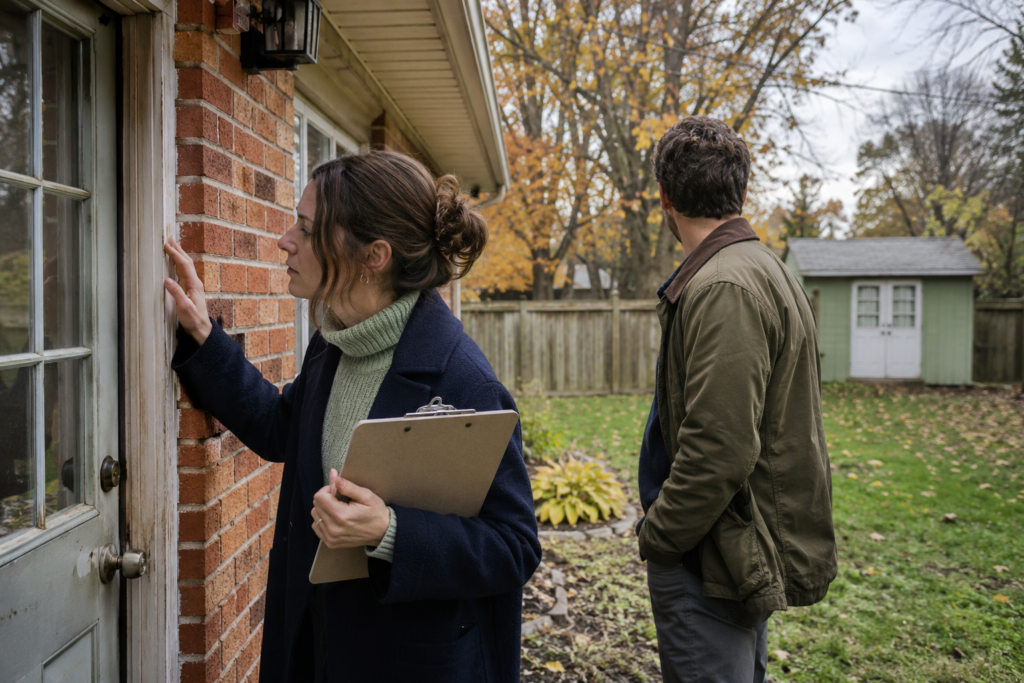
During the showing, note odors, staining, damaged trim, downspout placement, and stored items that limit visibility. These observations should become inspection questions, not diagnoses. If you intend to finish a basement or store valuable equipment there, tell the inspector so the review addresses your plans.
What land and improvements are you buying?
Obtain the parcel number, available survey, and information about fences, driveways, sheds, and any shared use. Ask whether a detached garage or extra strip of land is part of the same parcel included in the offer. If an important boundary is uncertain, have a surveyor determine what is needed to resolve it.
Also confirm which appliances, fixtures, shelving, and exterior items will remain. A freestanding workshop cabinet or attractive garden feature might be personal property rather than something the seller intends to include. Identify important items clearly in the written agreement.
A useful second-showing checklist
- Test whether your furniture and daily routines fit the room dimensions.
- Look at access to laundry, storage, parking, and mechanical equipment.
- Review unanswered questions from the first visit with your agent.
- Confirm the intended possession timing and any seller occupancy after closing.
- Write down issues that require an inspector, contractor, or title professional.
What will ownership cost after closing?
Build a budget that includes insurance, utilities, maintenance, and a reserve for the work identified during your evaluation. Ask your lender and the local assessor about estimating property taxes rather than simply copying the seller’s current bill. Michigan Treasury explains that certain ownership transfers affect taxable value, so the existing bill may not represent your future obligation.
For example, a home with a lower asking price and several near-term projects may require more available cash than a higher-priced property with fewer immediate repairs. Compare both the purchase and the first phase of ownership before choosing a comfortable limit.
Use the Lenawee County home buying guide for the transaction steps and read about local real estate guidance for coordinating research. Contact Jenn Caruso with Howard Hanna to turn your Morenci property questions into a clear buying plan.
If your shortlist includes an older house, the older-home buying checklist adds useful questions about records, condition, and specialist evaluations.