
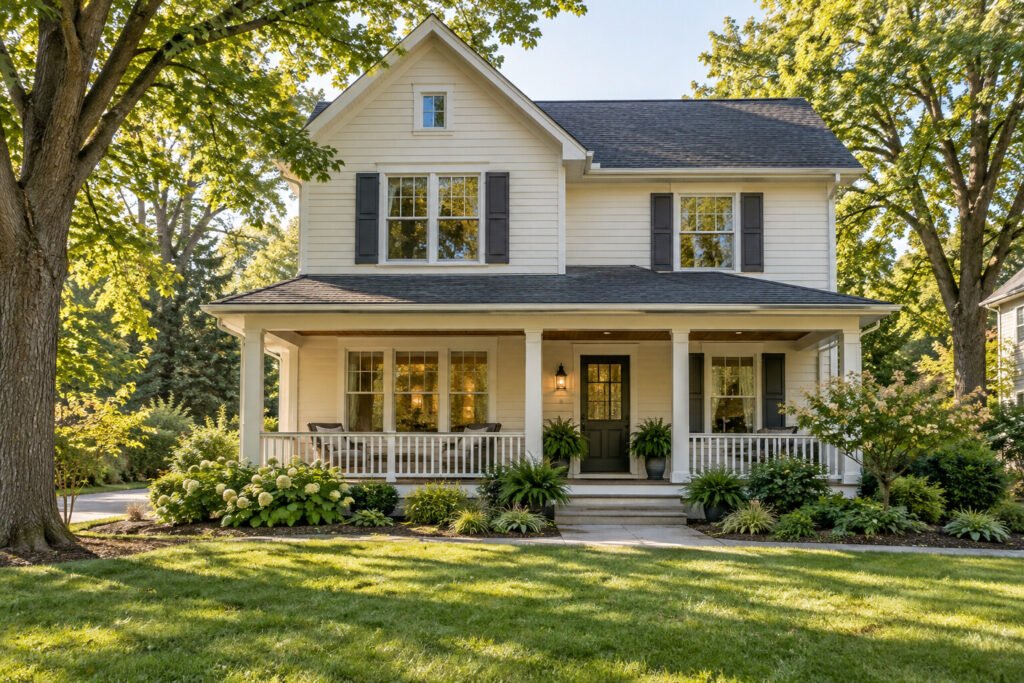
An older Tecumseh home can offer details that are difficult to recreate: substantial trim, an established setting, or a floor plan that has changed over several generations. The buying decision becomes clearer when you separate those appealing features from the condition of the building and the cost of your intended changes.
Start with the specific property. An older house with documented maintenance may present a different project from a recently decorated house with uncertain repairs. Your first showing should produce a short list of questions, followed by records and professional evaluations before contractual deadlines arrive.
Read the house in layers
Look at the original structure, later additions, and recent finishes as separate layers. Notice where floor levels change, rooflines meet, or an enclosed porch connects to the main house. Those transitions are useful places to ask how the work was completed and whether supporting records exist.
You do not need to diagnose a crack or identify wiring at a showing. Photograph concerns with permission and give them to your inspector. Ask the seller about the ages and service history of the roof, furnace, water heater, plumbing, and electrical equipment. An installation date is useful, but it does not establish present condition or remaining life.
Match the inspection to the property
Ask prospective inspectors what their standard inspection includes, what they cannot access, and when they recommend a specialist. A detached garage, crawlspace, chimney, or sewer connection may call for a separate scope. Confirm fees and scheduling before writing an inspection deadline into your offer.
The Consumer Financial Protection Bureau’s home loan toolkit distinguishes a home inspection from an appraisal. The appraisal addresses value; it does not replace the condition review you arrange for your own decision. Build that distinction into your purchase budget.
Questions worth taking to the showing
- Which repairs have receipts, warranties, or permit records?
- Has water entered the basement, crawlspace, roof, or addition?
- Are there areas the inspector will need cleared or unlocked?
- Which systems have been partly updated rather than fully replaced?
- Do you anticipate removing walls, replacing windows, or changing the exterior?
Check renovation plans before assuming they are simple
Tecumseh has a historic preservation review process. That does not mean every older home requires the same review. Ask the city’s building staff whether the parcel is subject to historic requirements and how your proposed work would be handled. The city’s published historic preservation process describes a review stage before applicable permits are obtained; confirm current procedures directly.
This matters most when the purchase only works if you can make a particular change. For example, if your plan depends on replacing original windows or enlarging a doorway, get guidance about that exact proposal. A contractor’s price and the city’s approval process answer different questions, and both can affect your timetable.
Consider older materials without guessing
For most homes built before 1978, federal lead disclosure requirements apply. Review the information and available reports provided for the property, and discuss any planned disturbance of older painted surfaces with a qualified professional. The EPA explains what lead information buyers should receive.
Similarly, ask a qualified professional about suspect insulation, flooring, or other materials before disturbing them. A listing photograph cannot identify a material reliably. You can appreciate an older interior while reserving money and time for the evaluation your renovation may require.
Turn findings into a workable purchase decision
Imagine two houses at similar asking prices. One has an attractive kitchen but no supporting paperwork for a roof alteration. The other has dated finishes and a clear maintenance file. Neither is automatically the better purchase. Compare the inspections, the work each needs, your available cash after closing, and the projects you can reasonably manage.
Use three categories: work that affects your willingness to buy, work needed soon after possession, and optional improvements. Ask qualified contractors for written scopes on significant items. Then discuss any requested repairs, credits, additional evaluation, or decision to proceed with your agent within the purchase agreement’s deadlines.
The Lenawee County home buying guide covers the broader process, and this explanation of working with a local real estate expert shows where coordinated research helps. For an older home in Tecumseh, contact Jenn Caruso with Howard Hanna to organize the property questions and your next steps.